Precision Lethality: The U.S. Navy’s $1 Billion “Ship-Killer” Investment
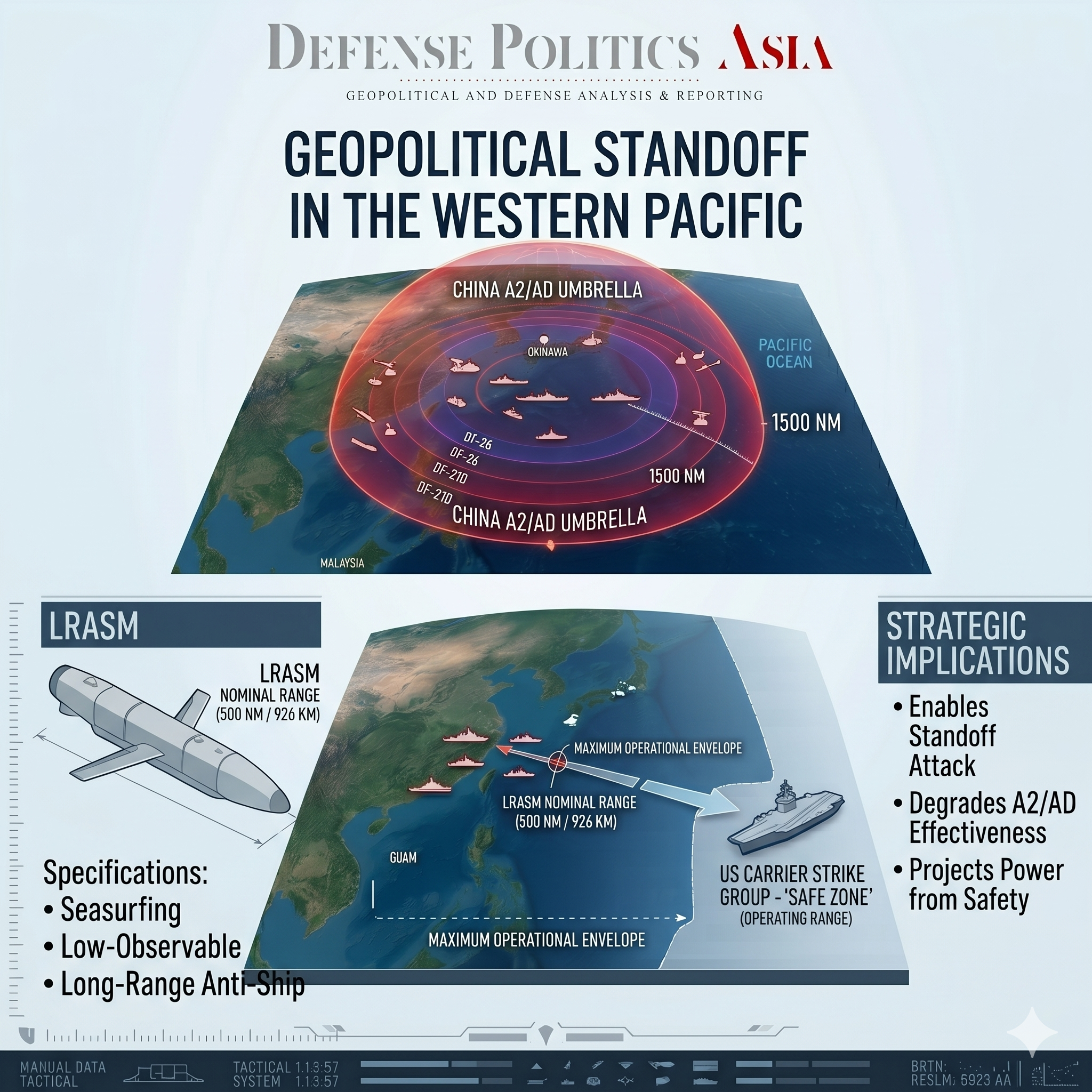

In a significant escalation of its maritime strike capabilities, the U.S. Navy has submitted a funding request to Congress in April 2026 for the purchase of 177 Long-Range Anti-Ship Missiles (LRASM). Valued at approximately $970 million, this procurement is not a one-off purchase but the latest move in an aggressive, multi-year strategy to stockpile advanced weaponry for high-end naval warfare.
1. The Numbers: Building a High-End Arsenal
This latest order follows a consistent pattern of large-scale acquisitions designed to reach a critical mass in the Pacific theater. By the end of this cycle, the U.S. Navy is on track to amass a stockpile exceeding 500 LRASMs.
| Procurement Period | Missile Count | Estimated Cost |
| Current Request (FY2027) | 177 Missiles | ~$970 Million |
| Previous Year (FY2026) | ~200 Missiles | ~$1 Billion |
| Two Years Prior | 164 Missiles | ~$800 Million |
While the price tag is staggering, the investment reflects the high cost of the cutting-edge technology required to defeat modern naval defenses.

2. Geostrategy: The Pacific Pivot
The sheer volume of these missiles indicates a clear strategic focus. While standard Harpoon missiles remain sufficient for regional threats, the LRASM is specifically engineered to counter a “Great Power” adversary: the Chinese Navy.
- Outranging Adversaries: With an official range of roughly 500 nautical miles (926 km)—and rumors of even greater secret capabilities—U.S. carrier strike groups can launch attacks from “safe zones” beyond China’s anti-access/area-denial (A2/AD) missile umbrellas.
- Strategic Reach: From the relative safety of the Sulu Sea or the Philippine Sea, these missiles can strike targets as far as Hainan Island or the Chinese coastline while the launching vessels remain deep within allied waters.
- Targeting the Fleet: China currently boasts the world’s largest naval force; the LRASM provides the specific inventory required to penetrate their sophisticated electronic and kinetic defense layers.

3. Technical Superiority: The “Silent Stalker”
Produced by Lockheed Martin ($LMT), the LRASM is designed to operate in “dark” environments where GPS and active radar might be jammed.
- Passive Homing: Unlike traditional missiles that emit radar signals (alerting the enemy to their presence), the LRASM is entirely passive. It “listens” for a target ship’s own radar emissions to find its mark.
- Stealth Profile: It features a low radar cross-section (RCS) and low infrared (IR) signature, combined with a sea-skimming flight path that keeps it below the radar horizon until it is too late for defense systems to react.
- Swarming Intelligence: Multiple missiles can communicate mid-flight to share data and coordinate their approach. This “autonomous intelligence” allows them to bypass defenses and ensure they prioritize the most high-value targets in a fleet.
4. Market Insight: Lockheed Martin ($LMT)
Despite securing billion-dollar contracts, Lockheed Martin’s stock has recently seen volatility and downward trends.
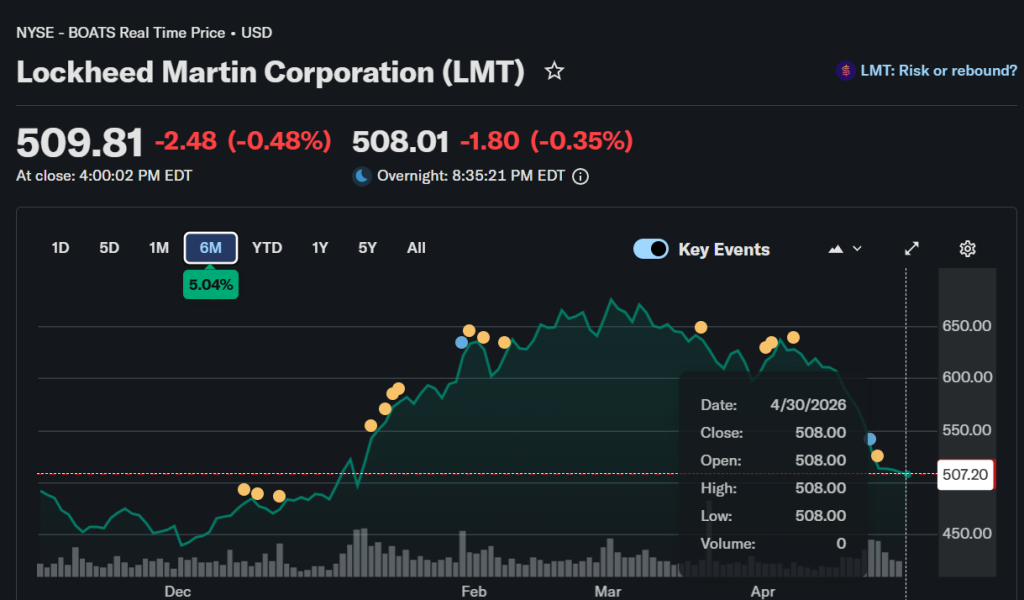
Market Analysis: Analysts suggest this disconnect stems from market skepticism regarding immediate naval conflict. While traders often react to short-term geopolitical “noise,” the Pentagon’s orders are long-term strategic commitments intended to build a credible deterrent for the late 2020s.
Conclusion
The procurement of the LRASM is more than a budget line item; it is a clear message of deterrence. By investing nearly $1 billion in a weapon that bypasses the most advanced defenses, the U.S. Navy is moving beyond “preparation” and actively building the specific inventory required to maintain the upper hand in a potential Pacific conflict.
Full Video Report: