The Iran war is back, it has resumed, and everything turned out exactly as I have explained to you guys previously. The situation is unfolding precisely as I expected, and we need to break down exactly why this is happening.
First things first: US Central Command (CENTCOM) has announced a massive round of strikes against Iran, hitting over 80 different targets on the 7th of July. Trump has heavily signaled that the US will most likely continue to strike Iran from here on out.
Why did this happen? Well, it was in direct response to the Iranians hitting three different commercial vessels—flying Marshall Island, Saudi Arabian, and Liberian flags—within a 24-hour period. And they did this while they were still conducting funeral proceedings for Khamenei, which completely pissed off Donald Trump. In response, the US targeted Iranian air defense systems, command and control networks, coastal radars, anti-ship missile capabilities, and their fleet of small speedboats.
The Strait of Hormuz: An Empty Threat
I’ve mentioned before that Iran only really has two main trump cards. The first is to terrorize their weaker neighboring countries with military force. The second is threatening the vital Strait of Hormuz. By choking this strait, they can trap oil and gas exports from Iraq, Kuwait, Qatar, Bahrain, the UAE, and Saudi Arabia, heavily disrupting international trade. It’s a strategy designed to force anyone to the negotiating table—except the United States, which is the only country that can just bomb the hell out of them in response.
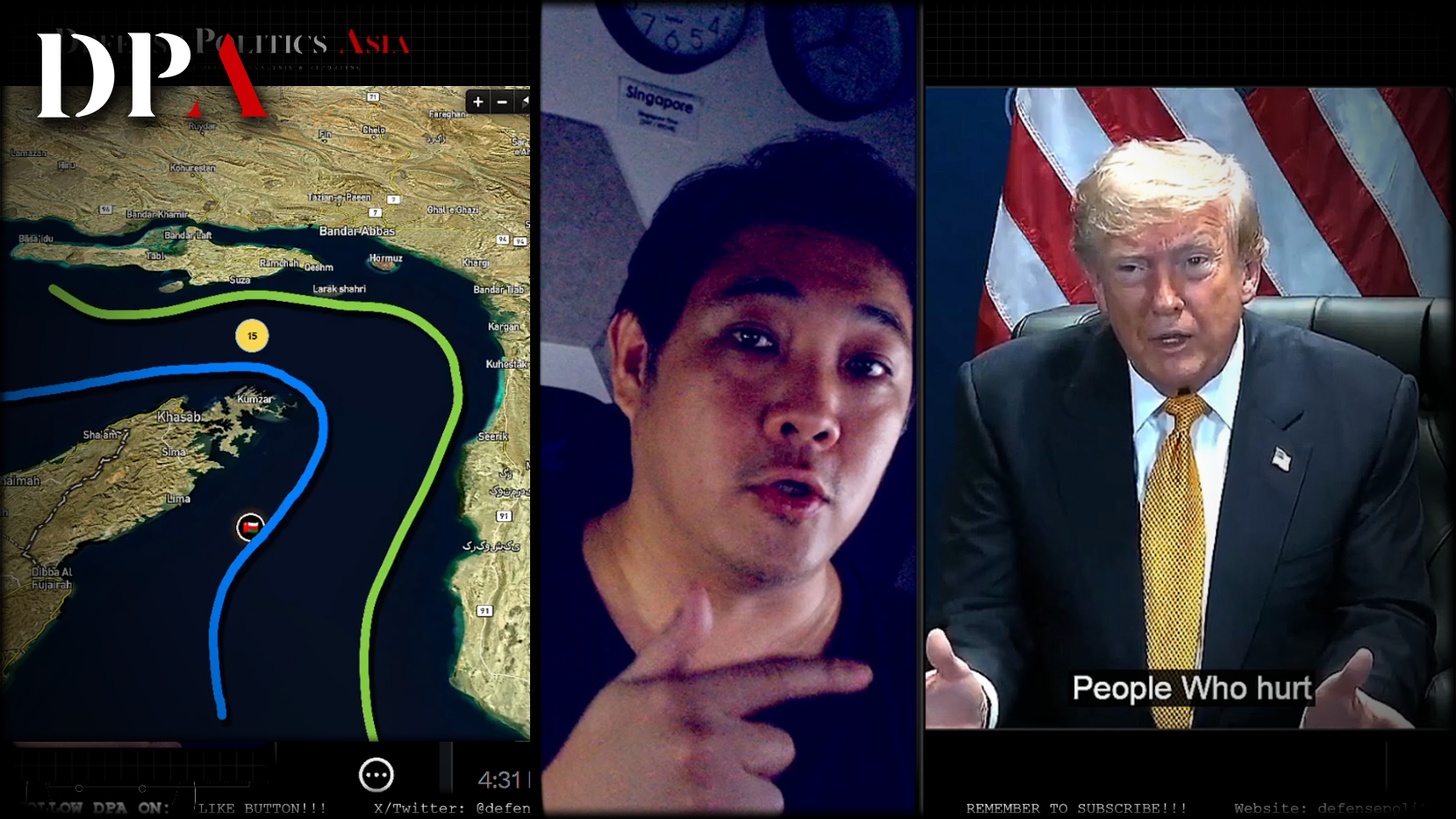
Right now, Iran is trying to play information warfare. They are posturing as if they are winning, demanding that commercial ships use an “Iranian route” and pay a toll. But no one is paying that toll. Why? Because US sanctions are still fully in effect, and companies are terrified of being sanctioned by the US.
Instead, ships are bunching up into convoys and using the southern “American route,” heavily escorted by the US Navy. If you look at the maritime tracking data, you can see these clusters of ships turning off their transponders, crossing the strait, and popping up safely on the other side. Shipping hasn’t stopped. The Iranian threat of closing the Strait of Hormuz is an empty threat. Their military is so degraded right now that they simply don’t have the means to do it. The US has A-10 Warthogs and AH-64 Apaches actively hunting down their speedboats; if those boats come out, they’re going to get sunk.
The Death of the MOU and Trump’s Frustration
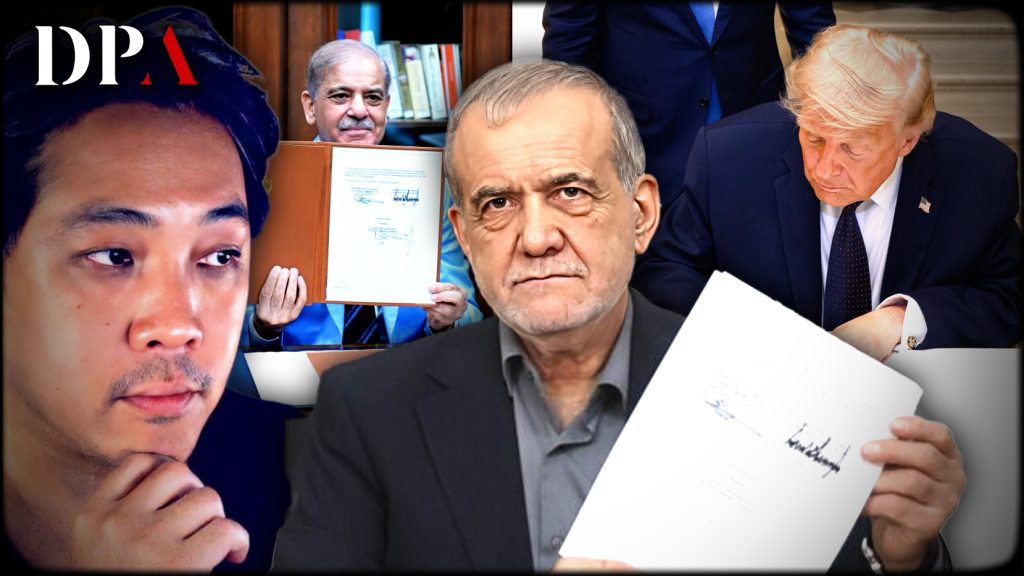
I’ve done the long coverage of the Memorandum of Understanding (MOU) between the US and Iran—which frankly was a terrible deal and a soft surrender for Iran, despite what their propaganda claimed. But now, that MOU is basically dead.
US-Iran MOU “deal” is MORE INTERESTING than you think!
In this deep-dive analysis, Defense Politics Asia (DPA) takes a critical, line-by-line look at the recently signed Memorandum of Understanding (MOU) between the United States and Iran. While mainstream media often paints a surface-level picture of “wins” and “losses,” the reality within the text reveals a complex geopolitical landscape of carrots, sticks, and strategic control.
Donald Trump has had enough. I actually thought he would give up on negotiations much earlier, but he clearly held off to not detract from the United States’ 250th 4th of July celebrations. Now that the celebration is over, the strikes have begun. Trump has explicitly stated that he is tired of dealing with Iranian leadership, calling them irrational, liars, and “scum.”
And this touches on a point I’ve made for months: the biggest problem with Iran is their irrationality. It is impossible to negotiate with a regime that isn’t using logic. Furthermore, Iran is dealing with intense internal factional conflicts—the IRGC factions on one side, civilian faction on the other—all jostling for power. It’s entirely possible that rogue commanders, hyped up on their own propaganda and angry over the funeral, independently ordered the strikes on the commercial ships and blew up the entire negotiation process.
What Happens Next? Blockades, Bombs, and Kharg Island
So, where does this go from here? The fighting will resume fully because, honestly, it’s just easier for the Americans to bomb the hell out of their enemies until they get what they want.
We are looking at a potential return to a full US naval blockade on Iran. Furthermore, Trump has strongly hinted that regime change is back on the table. But, as I’ve continually pointed out, regime change isn’t possible without ground elements. Before any American troops could even think about landing safely, there would need to be months of heavy air campaigns, particularly targeting the largely untouched eastern parts of Iran.
Interestingly, Trump noted that they have the capability to blow up bridges, power plants, and desalination plants, but they are holding off on that for now. As for Kharg Island—the absolute center of Iran’s oil export economy—Trump stated it would be a final target. And they don’t necessarily want to destroy it. The goal would be for the US to actually take over Kharg Island at the end of the war, denying Iran their economic future.
A Side Note
If you’re interested in this coverage, you should subscribe and watch the video reports on this issue on Youtube (
DPA provides deep insights into military, geopolitics, internal politics, and economic developments across Asia and around the world. This is the MAIN channel, which will cover geopolitics, internal politics, military developments, economics as well as other major collaborations and editorial stuffs.
) YouTube’s algorithm doesn’t push my Iran war coverage and is trapping the channel (due to their algo design) in the Ukraine War niche. Honestly, the money I make from doing these non-Ukraine War videos isn’t even enough to buy a McDonald’s meal here in Singapore. Right now, I basically is doing this as a public service, because I want to inform you guys about the most important things happening in the world right now.
I highly encourage you to go back and check out my old Iran war videos. Use present-day information to fact-check my analysis from half a year ago, and see for yourself if I was right.
In this deep-dive analysis, Wyatt from Defense Politics Asia (DPA) examines the current status of the Iran War and the highly-publicized peace negotiations. As contradictory reports emerge from the U.S. and Tehran, we break down the reality of Iran’s military position, the internal political friction between civilian negotiators and the IRGC, and why this deal may ultimately be a “dragging tactic.”