Trump, Xi, and Putin in Shenzhen: The Big Three’s Real Geopolitical Agenda
As the leaders of the United States, China, and Russia converge in the same city for the first time in history, economic pressures, the Iran conflict, and an accelerating artificial intelligence (AI) arms race are driving an unspoken push for great-power stabilization—while Europe and Ukraine find themselves sidelined.
As the leaders of the United States, China, and Russia converge in the same city for the first time in history, economic pressures, the Iran conflict, and an accelerating artificial intelligence (AI) arms race are driving an unspoken push for great-power stabilization—while Europe and Ukraine find themselves sidelined.
This article is adapted from our video analysis, Trump, Xi, Putin: The Big 3’s Real Agenda.
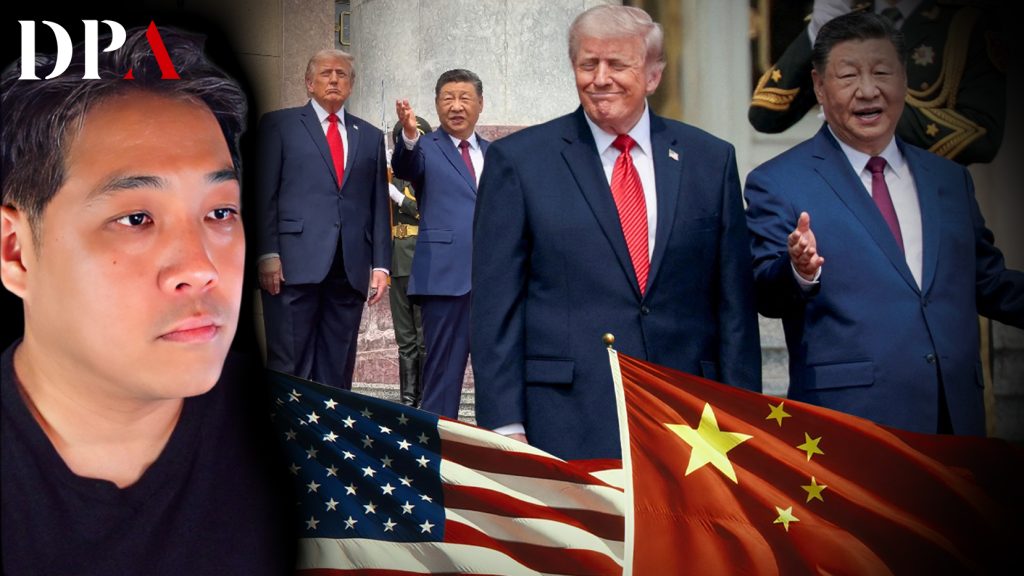
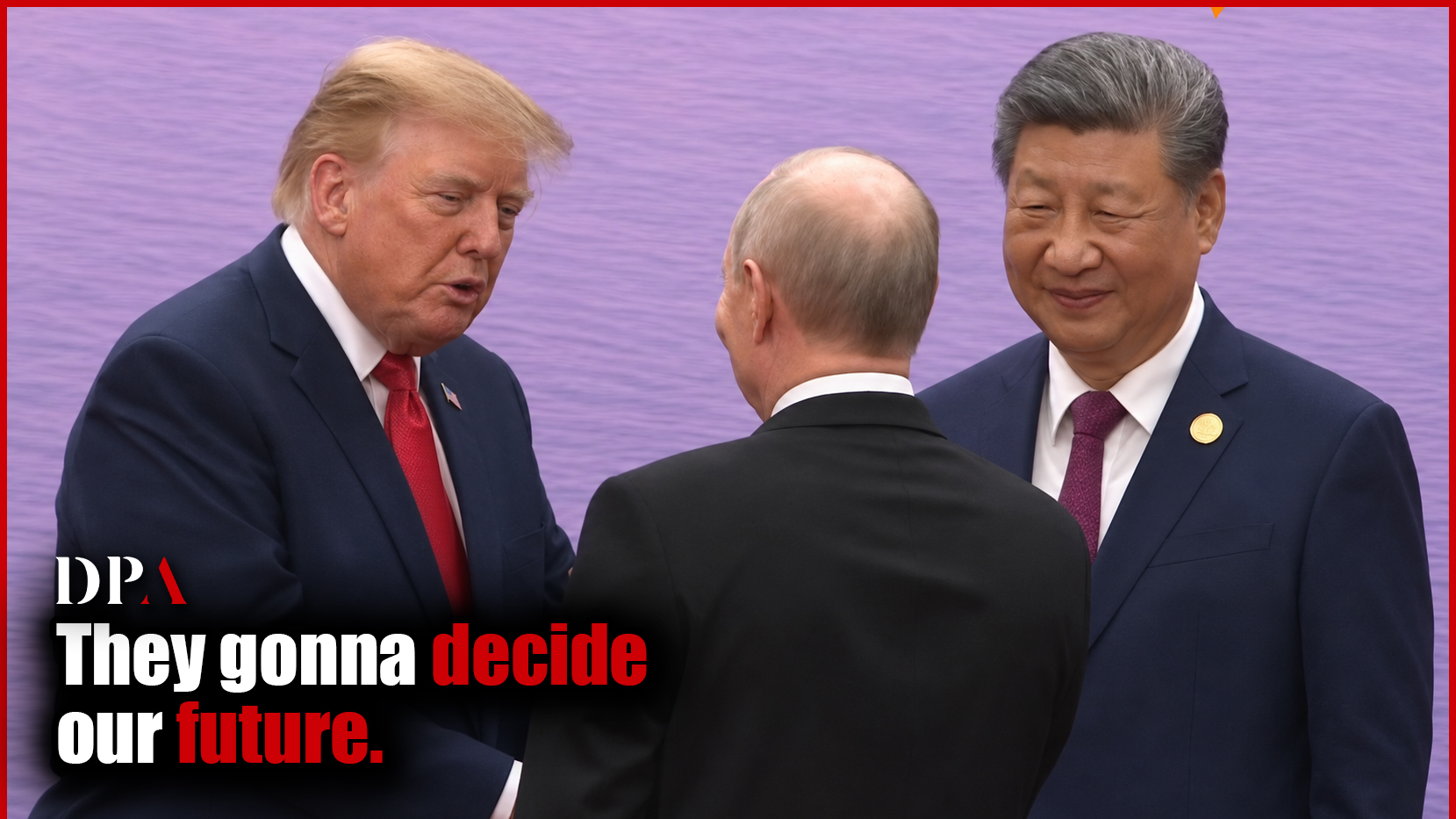
For the first time in history, the top leaders of the world’s three foremost geopolitical powers—U.S. President Donald Trump, Chinese President Xi Jinping, and Russian President Vladimir Putin—have gathered in the same location. Converging in Shenzhen, China, on the sidelines of the Asia-Pacific Economic Cooperation (APEC) Summit, the three leaders crossed paths at the welcome banquet hosted by Xi on 18 November. Xi personally greeted Trump on the airport tarmac, while Putin was met at the airport by Cai Qi, a member of the Chinese Communist Party’s Politburo Standing Committee.
Even prior to any formal trilateral summit, the optics inevitably recall the World War II “Big Three” conferences of Winston Churchill, Franklin D. Roosevelt, and Joseph Stalin. Yet unlike 1945, when Allied leaders met to divide the post-war map, the underlying imperative in Shenzhen is far more pragmatic: preventing the global economy and international order from spiraling into systemic collapse or direct military conflict. Just as telling is who is absent from the table—Europe has been visibly left out of this emerging geopolitical arrangement.
Why Ukraine Is at the Bottom of the Agenda
Ahead of the summit, Ukrainian Foreign Minister Andrii Sybiha expressed hope that Washington and Beijing would leverage their influence to pressure Moscow into ending the war in Ukraine. In reality, Ukraine is virtually a non-factor in the calculations of the Big Three.
- Russia’s Existential Calculus: For the Kremlin, the war in Ukraine is a conflict it cannot afford to lose without triggering severe domestic political fallout.
- Europe’s Strategic Burden: For European capitals, the conflict has become an intractable drag with no painless exit.
- Global Indifference Outside Europe: Across Asia, Africa, and the Americas, the fighting in Ukraine is viewed largely as a localized dispute rather than a systemic global shock.
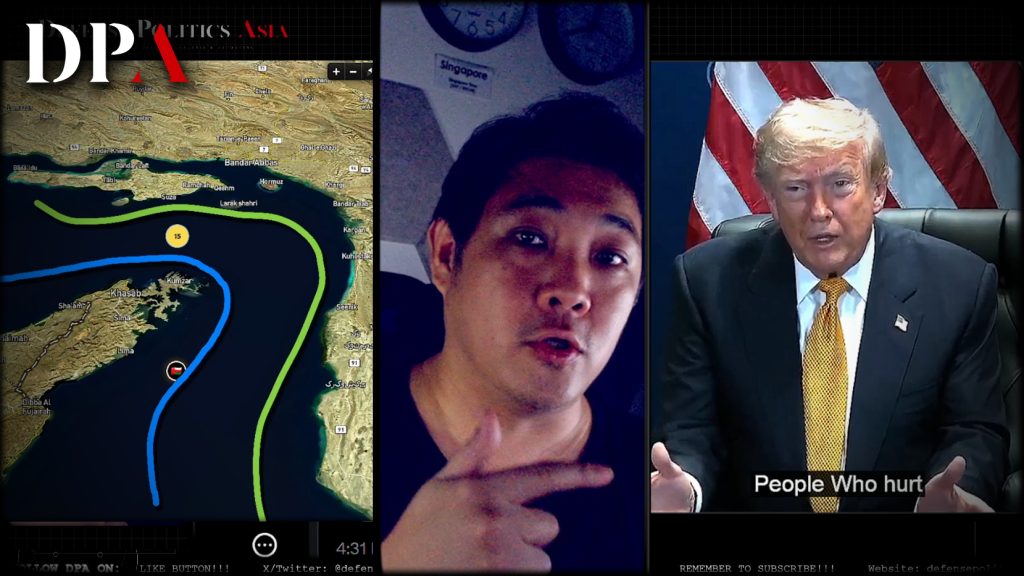
By contrast, the war involving Iran represents a true regional conflict with immediate worldwide consequences, disrupting international shipping and energy flows through blockades and hostilities around the Strait of Hormuz. Compared to those global chokepoints, Ukraine carries minimal weight in a Trump–Xi–Putin discussion.
Shifting Bilateral Trade and Supply Lines
To understand what each leader wants out of Shenzhen, it is necessary to look at the evolving economic realities binding—and dividing—the three powers.
U.S.–China: A Tariff Equilibrium and the AI Chip Chokepoint
Despite lingering friction, relations between Washington and Beijing have settled into a relatively calm, managed equilibrium. After the U.S. Supreme Court struck down the 10% reciprocal and 10% fentanyl-related tariffs in February, Washington now relies on older Section 301 duties of 7.5% to 100% on Chinese goods, plus a new 12.5% forced-labor tariff, while China retains a 10% tariff on American goods.
In practical terms, the acute phase of the trade war is over. Rather than reshoring all manufacturing back to the United States, exporters and American importers have largely absorbed and split the tariff costs to keep commerce moving. Beijing continues to honor commitments to purchase at least 25 million tons of U.S. soybeans, while Chinese rare earth exports to the U.S. remain roughly 75% below pre-restriction levels. Because the bottleneck in rare earths lies in refining capacity rather than raw deposits, Washington is steadily building alternative processing chains to erode China’s monopoly over time.
The sharper flashpoint involves advanced semiconductors. Following scrutiny around Nvidia and high-end compute flows, Washington expanded export licensing restrictions on AI chips across Southeast Asia—including Singapore, Malaysia, Thailand, and Vietnam—to curb transshipment through regional intermediaries into China. In Singapore, AI and graphics processing unit (GPU) transshipment activity has helped fuel striking headline gross domestic product (GDP) growth figures even when everyday citizens feel little economic windfall on the ground. Still, both Trump and Xi have kept direct communication open to prevent tensions from boiling over.
China–Russia: Rebounding Energy Trade Amid the Iran Shock
Bilateral trade between China and Russia dipped by 6.9% in 2025, defying expectations of uninterrupted expansion. In 2026, however, trade rebounded sharply, surpassing full-year 2025 totals ahead of schedule.
That surge was driven primarily by the Iran war. Beijing had previously relied on discounted crude from Iran and Venezuela as a strategic buffer against overdependence on Russian energy. Once naval blockades curtailed Iranian oil shipments, China respected the blockade, tapped its strategic reserves, and ramped up Russian oil imports by 17% in the first half of 2026. While the Power of Siberia 1 pipeline has delivered 38.8 billion cubic meters of natural gas to China, the proposed Power of Siberia 2 pipeline remains in limbo. Crucially, Beijing’s multi-year push into electric vehicles, solar power, and renewables cushioned its economy from what could otherwise have been a devastating oil shock.
U.S.–Russia: Minimal Trade, Maximum Sanctions Leverage
Direct U.S.–Russia trade remains negligible at roughly $4.4 billion for all of 2025, confined mostly to American imports of Russian fertilizer, palladium, and enriched uranium for nuclear fuel. Two months after the death of Senator Lindsey Graham, Trump signed the sanctions act bearing his name into law, then on 16 October ordered a 500% tariff on Russian imports and waived it in the same order, two days before the law’s deadline—preserving diplomatic leverage for ongoing Ukraine negotiations.
Domestic Headwinds Facing All Three Superpowers
Beneath the diplomatic pageantry in Shenzhen, all three leaders are contending with the lingering economic hangover of massive pandemic-era money printing, persistent inflation, and rising living costs.
| Country | Key Economic Indicators | Core Structural Vulnerability |
|---|---|---|
| United States | ~3.6% inflation (Federal Reserve’s preferred gauge); ~4.1% unemployment; ~3.4% GDP growth | Expanding federal deficit (nearly $2 trillion in fiscal 2026, with national debt past $40 trillion) and inflation outpacing growth |
| China | Stagflation plateau; property investment down 21.6% (first 10 months); 17.2% youth unemployment | Prolonged real estate slump, weak household confidence, and mounting graduate unemployment |
| Russia | ~7% inflation (projected 7.1%–7.6% by year-end); record-low 2.2% unemployment; oil & gas revenue down 14.1% | Wartime labor shortages driving wage inflation, infrastructure repair costs, and secondary sanctions |
Washington’s Deficit and Midterm Reality
In the United States, inflation on the Federal Reserve’s preferred gauge hovers near 3.6%—well above the central bank’s 2% target—pushed higher by energy prices tied to the Iran conflict. Although unemployment remains low at 4.1% and GDP growth sits at 3.4%, price pressures outstripping growth eroded household purchasing power and contributed to Republican losses in the midterm elections. More fundamentally, a national debt that has already passed $40 trillion, with a nearly $2 trillion deficit in fiscal 2026, leaves Washington little appetite for open-ended global destabilization.
Beijing’s Internal-First Imperative
China has managed to exit its multi-year deflationary spiral—halting a 40-month slide in industrial producer prices around March—only to enter a period of flat, stagflation-like stagnation. Real estate investment fell another 21.6% across the first 10 months of the year, keeping domestic consumption cautious despite impressive urban infrastructure and technological showcases. Combined with a 17.2% youth unemployment rate that swells with every new graduating cohort, Beijing’s overriding priority is domestic stability.
Viewed through the lens of Chinese political history, internal cohesion always takes precedence over external entanglement. Much as the Kuomintang exhausted itself fighting Japan while the Communists consolidated strength internally, Beijing avoids foreign interventions—whether in Venezuela or Iran—that could drain national resources or invite domestic unrest. That historical instinct explains why Xi Jinping has opted for pragmatic engagement with Trump rather than confrontational “wolf warrior” diplomacy.
Moscow’s Wartime Strain
Of the three economies, Russia faces the most acute structural squeeze. Unlike the United States, which can finance deficits through the dollar’s reserve status, or China, which commands unmatched industrial scale, Russia is bearing the direct attrition of war. Inflation stands at 7% against a 4% central bank target, while a record-low 2.2% unemployment rate reflects a severely tight labor market that inflates wages and compresses corporate margins. Ongoing Ukrainian long-range strikes require constant spending on energy repairs, even as oil and gas revenues have declined 14.1% under sanctions and U.S. secondary tariffs—including the threat of a 100% tariff on major buyers of Russian crude such as India, now waived but reversible.
The Hidden Catalyst: The AI and Superintelligence Arms Race
Beyond immediate economic pressures lies a deeper strategic shift: the rapid transition from conventional Artificial Intelligence to Superintelligence (SI).
For Vladimir Putin, this technological race poses a long-term existential dilemma. While the U.S. and China are advancing rapidly in AI and SI capabilities, Russia risks falling decisively behind. Within one to five years, the integration of advanced AI into military command, autonomous systems, and warfare could leave Moscow unable to prevail in a conventional conflict against either Washington or Beijing without resorting to nuclear weapons. Because Russia’s wartime industry consumes equipment and manpower on the Ukrainian front as fast as they are produced, Moscow struggles to accumulate and refine next-generation capabilities. Consequently, Putin enters Shenzhen seeking diplomatic breathing room—hoping Trump and Xi will help normalize Russia’s economic and political standing across Asia and Africa despite European isolation.
China, though nearly neck-and-neck with the United States in AI development, shares a parallel concern. An unchecked cyber or AI arms race threatens the internal control Beijing prizes above all else. Having largely realized the prosperity and national strength associated with its “great revival,” China’s objective is to buy time, protect its gains, and project itself as a responsible global stabilizer.
Meanwhile, Donald Trump enters the final two years of his presidency focused on cementing a transformative legacy. With post-midterm Democrats incentivized to pass bipartisan domestic measures ahead of the next presidential race, Trump has room to maneuver at home while pressing ahead on long-avoided foreign policy fronts—much as he did by moving the U.S. embassy to Jerusalem in his first term, restructuring global tariffs to defend U.S. financial dominance, confronting Iran militarily, reasserting the Monroe Doctrine across the Americas following the Venezuela crisis, and designating drug cartels as terrorist organizations.
What Comes Next
Observers expecting dramatic public breakthroughs or grand bargains from Shenzhen may be disappointed, yet the true significance of the Big Three’s convergence lies in mutual restraint. None of the three powers is currently positioned—or eager—to force a zero-sum superpower showdown. If Washington, Beijing, and Moscow leave Shenzhen with an unspoken framework to manage global economic turbulence, contain escalation, and prevent direct great-power or nuclear conflict, all three leaders will have achieved what they came for.