Focus Active theater
Iran War
Operation Epic Fury (US) / Roaring Lion (Israel)
The United States and Israel vs the Islamic Republic of Iran. Round two, after the June 2025 12-day war. Read every side first.
- US vs Iran: talks mediated talks resumed
- US vs Iran: blockade in force
- US vs Iran: strikes paused, threatened
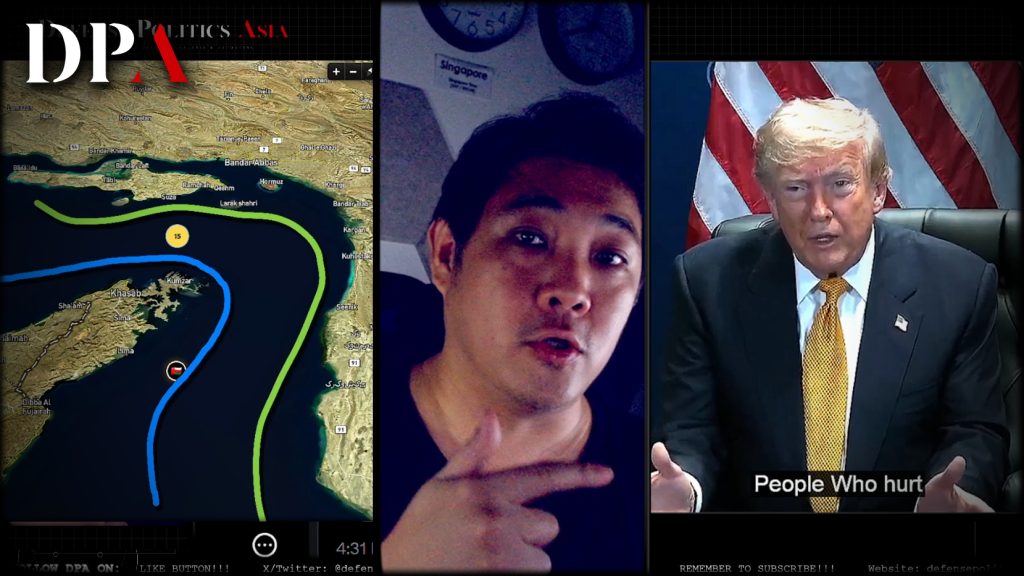
- Iran vs shipping: Hormuz restricted
- Israel vs Hezbollah framework stalled
- Houthis vs Saudi Arabia escalating
- Iran vs IAEA referred to UNSC
Snapshot Snapshot as of 23 September 2026. The Islamabad MOU has broken down; the blockade is in force; talks resumed through Qatar on 22 September. Rolling war lives in SITREPs below.
DPA read
Our own assessment, dated. Kept apart from what the sides claim.
After the first 40-day round paused, Tehran went to Moscow, not Beijing. China stayed quiet to protect its Gulf ties. Iran wants Russian drone, electronic-warfare, and ground-war know-how. We expect both sides to use the pause to rearm.
Talks collapsed on Iran's 10-point reply. The war has gone one-sidedly against Iran, and most of the bombing inside Iran never shows up in open sources. The US has not finished its objectives on drones, missiles, and nuclear material, so a second phase is coming.
The Islamabad MOU is a soft surrender, not an Iranian win. Iran gives up its proxy and Hormuz leverage; oil sales and frozen funds stay under US Treasury control. Israel does not recognise the MOU and is the biggest threat to it.
The MOU is effectively dead after the 7 July strikes. Iran's Hormuz threat is an empty one while US-escorted convoys keep moving. Trump has named Kharg Island, the heart of Iran's oil exports, as a final target.
The sides
Each side in its own words, next to each other. Nothing merged.
United States
Position as of 22 September 2026Demands
- Iran must never have a nuclear weapon; its enriched stockpile disposed of under IAEA supervision (MOU text)
- A full opening of the Strait of Hormuz (Rubio, 5 May 2026)
- Iran stops attacking commercial shipping and US naval ships
- No country helps Iran evade sanctions (Rubio, 2 September 2026)
- Other states join the economic isolation of Iran until it negotiates (Trump at the UN, 22 September 2026)
Compromise
- 7 April 2026: two-week ceasefire, conditional on Hormuz opening
- 17 June 2026 MOU: blockade lifted within 30 days, sanctions ended on a schedule, Treasury oil waivers, frozen funds made available, a plan worth at least US$300B
- 3 August 2026: Trump called off a planned major strike to give diplomacy more time, at the urging of Qatar, Saudi Arabia, and the UAE
- 22 September 2026: envoys Witkoff and Kushner held Qatar-mediated talks with Araghchi in New York
Moves
- 24 August 2026: Treasury launches Operation Economic Outcast, a sanctions campaign against Iran and its enablers.
- 30 August and 1 September 2026: strikes on launchers on Larak Island, then on IRGC air defence, radar, maritime, mine-laying, and communications targets.
- 8 September 2026: strikes on Iranian tankers after more attempted missile attacks on US warships.
- CENTCOM: more than 50,000 US service members in the region (1 September 2026).
In their words
"I have a big decision to make. Will a deal be made with Iran that lets them rebuild and create a far greater country than it ever was before? … Or do I annihilate the Islamic Republic and do it quickly, never giving them a chance to kill and destroy people and countries again?"
... UN General Assembly speech. https://www.channelnewsasia.com/world/iran-us-un-trump-speech-peace-deal-6402951
"The failing Nation of Iran wants to make a deal, quickly and badly. I will determine whether or not the U.S.A. will choose to engage - The concept of which we are open to."
... Truth Social. https://www.trumpstruth.org/statuses/41715
"Iran continues to try to hit U.S. naval ships. And for every time they do that or try to do that, they're going to lose tankers. And I think you'll see that again today."
... Day of the US strikes on Iranian tankers. https://www.wbal.com/us-strikes-iranian-tankers-after-more-attempted-missile-attacks-on-navy-warship
Islamic Republic of Iran
Position as of 22 September 2026Demands
- End the war on all fronts, including Lebanon (Foreign Ministry, 22 September 2026)
- Lift the US naval blockade of Iranian ports
- Release frozen Iranian assets
- The US returns to its commitments under the Islamabad MOU, which Iran says remains valid
- Hormuz opens only when US sabotage, threats, and attacks stop (Rezaei, 7 September 2026)
Compromise
- 7 April 2026: accepted a two-week ceasefire with passage through Hormuz in coordination with Iran's armed forces
- 17 June 2026: signed the MOU, agreeing it shall not procure or develop nuclear weapons and accepting disposal of its stockpile under IAEA supervision
- 27 August 2026: discussed a temporary joint Hormuz shipping corridor and joint mine clearing with Qatar and Oman
- 22 September 2026: a senior official told Reuters the strait could reopen within seven days if Washington eased military pressure and lifted the blockade
Moves
- 28 February to 1 March 2026: Supreme Leader Ali Khamenei killed in the opening strikes. Mojtaba Khamenei named Supreme Leader on 8 March.
- 10 August 2026: Mojtaba Khamenei confirms Ahmad Vahidi as IRGC commander and names new chiefs of the General Staff, IRGC Navy, and Basij.
- 30 August 2026: ballistic missiles fired at US-used air bases in Jordan; Jordan intercepted eight.
- 16 September 2026: Araghchi meets Wang Yi in Beijing.
- 22 September 2026: state TV says the New York meeting was held at the insistence of the American side.
In their words
"I say clearly: if the United States returns to its commitments in the memorandum of understanding, the Islamic Republic of Iran will immediately reciprocate."
... Shanghai Cooperation Organisation summit. https://en.mehrnews.com/news/247360/Iran-ready-to-reciprocate-if-US-honours-MoU
"It is in Washington's interest to accept these conditions. Trump's threats will not achieve any results. We are prepared for a decisive war."
... Setting out three conditions for restarting talks. https://timesofindia.indiatimes.com/world/middle-east/iran-gives-us-3-conditions-to-restart-talks-says-trumps-threats-will-not-achieve-results/articleshow/134360212.cms
"The Americans must have understood that the era of proportionate responses has come to an end. Any aggression against Iran's interests and security will receive a faster, more intense, and more painful response."
... After US strikes on Iran-linked tankers. https://english.aawsat.com/world/5315228-irans-top-negotiator-threatens-faster-more-intense-response-us-attacks
"My emphatic and repeated recommendation to the rulers of Islamic countries, especially the countries of West Asia and the Gulf, is to identify your real enemy, understand his plan and confront it."
... Written message to Gulf rulers. https://www.channelnewsasia.com/world/iran-khamenei-message-gulf-rulers-confront-real-enemy-6350241
Israel
Position as of 22 September 2026Demands
- Any final deal dismantles Iran's enrichment facilities and removes enriched material from Iran (Netanyahu, 24 May 2026)
- The Islamic Republic should fall (Netanyahu, 3 September 2026)
- Israel keeps the right to defend itself on every front, including Lebanon
- No full withdrawal from southern Lebanon until Hezbollah gives up its weapons
Compromise
- 24 May 2026: Netanyahu publicly accepted the MOU track toward a final agreement on Iran's nuclear program
- June 2026: accepted a US-brokered Lebanon framework of gradual withdrawal as the Lebanese army deploys and Hezbollah disarms. Implementation has stalled
Moves
- Co-launched the 28 February 2026 strikes as Operation Roaring Lion.
- Does not recognise the Islamabad MOU (our 19 June read).
- 2 September 2026: Katz warns Israel will respond independently if attacked.
In their words
"We will defeat this regime. It will fall, we will bring it down. It is already standing on very shaky legs."
... i24NEWS interview. https://www.israelnationalnews.com/news/432626
"If they attack us, we will respond with great force, independently of anyone else."
... As US–Iran strikes resumed. https://www.straitstimes.com/world/middle-east/israel-says-prepared-to-respond-with-great-force-if-iran-attacks
"President Trump and I agreed that any final agreement with Iran must eliminate the nuclear threat entirely. This means dismantling Iran's uranium enrichment facilities and removing enriched nuclear material from its territory."
... Statement after a call with Trump on the emerging MOU. https://www.thejakartapost.com/world/2026/05/25/netanyahu-admits-difficulty-influencing-trump-decisions-on-iran
Map
Live from the DPA Conflict Atlas. Sergeant and above.
Conflict
Sergeant and above
Intel is open. The Conflict atlas is for DPA Sergeant and above, $5 a month.
The rest
Third parties, blocs, and developments that move the board.
Mediator
Pakistan
Brokered the April ceasefire, hosted the 11–12 April Islamabad Talks (21 hours, no deal), and mediated the June MOU with PM Shehbaz Sharif as guarantor. Field Marshal Asim Munir led a delegation to Tehran in late August. About 8,000 Pakistani troops are in Saudi Arabia under a defence pact (Reuters, 18 May 2026).
"Under the trilateral agreement, any aggression against any of the three [countries] is regarded as an aggression against all. There is no ambiguity about that."
... On the Makkah defence pact with Saudi Arabia and Türkiye. https://www.geo.tv/latest/681313-houthi-attacks-on-saudi-arabia-could-trigger-makkah-defence-pact-warns-pakistan
Mediator
Qatar
Co-mediator with Pakistan. The PM held talks in Tehran on 27 August on a temporary joint Hormuz corridor and mine clearing. Qatari diplomats mediated the 22 September talks in New York.
"The visit comes in line with the State of Qatar's firm position that the diplomatic path is the best means of resolving differences & promoting security & stability in the region."
... https://www.aljazeera.com/news/2026/8/27/qatars-prime-minister-to-visit-tehran-seeking-to-revive-us-iran-talks
Mediator
Oman
Negotiated a Hormuz shipping-route framework with Iran, then postponed the 14 September Salalah meeting where Gulf states were to see it.
"In the interests of consensus, the regional meeting set for tomorrow in Salalah has been postponed. We remain committed to fostering dialogue that supports stability and lasting cooperation in our region."
... https://www.fm.gov.om/en/55636/
Position
Saudi Arabia
Shut the East–West pipeline after drones launched from Iraq's Maysan province hit it on 10–11 September, and held off retaliating to give Baghdad time. Also fighting a Houthi advance in Yemen. Reuters reports Washington rebuffed the Crown Prince's requests to join the Yemen fight.
Position
United Arab Emirates
Hit by Iranian fire during the war. Rejects any Iranian control over passage through Hormuz.
"Our energy exports will not be held hostage, nor will our trade and economic activity."
... https://tribune.com.pk/story/2627959/uae-says-its-energy-exports-will-not-be-held-hostage-by-iran-war
Position
Hezbollah / Lebanon
Hezbollah entered the war on 2 March 2026. On 29 August Naim Qassem rejected the Lebanon–Israel framework, and Hezbollah refuses full disarmament while Israeli troops remain in Lebanon.
"We fought two major wars in 2024 and 2026, and we remain in a state of war and confrontation with the Israeli enemy."
... https://shafaq.com/en/Middle-East/Hezbollah-chief-vows-resistance-despite-Israeli-military-advantage
Position
Houthis (Ansar Allah)
Advancing along Yemen's Red Sea coast. Attacked Khamis Mushait on 15 September and say they fired on Riyadh on 19 September. The EU says Bab el-Mandeb is closed. No verified first-person quote on record yet.
Position
Iraq
Baghdad confirmed the drones that hit the Saudi pipeline came from Maysan province, and PM Ali al-Zaidi sacked the province's operations commander and police chief. Kataib Hezbollah and Harakat al-Nujaba reject disarmament.
Position
China
Wang Yi urged a return to the Islamabad MOU when he met Araghchi in Beijing on 16 September. Voted against the IAEA referral.
"We urge all parties to take effective measures to open the Strait of Hormuz at an early date, safeguard the unimpeded and safe passage of international waterways, and maintain the stability of international energy transportation and the production and supply chain."
... Chinese MFA readout. https://www.mfa.gov.cn/eng/wjbzhd/202609/t20260918_12025171.html
Position
Russia
Putin received Araghchi in St Petersburg on 27 April 2026. Voted against the IAEA referral. No verified Kremlin statement on the war from September yet, so this column freezes at March.
"We believe that strikes on nuclear facilities are potentially extremely dangerous. (...) Therefore, the Russian side, taking an extremely responsible stance on this issue, has repeatedly voiced its concerns."
... On strikes near the Bushehr nuclear plant. https://www.al-monitor.com/originals/2026/03/kremlin-says-strikes-near-bushehr-nuclear-plant-iran-are-dangerous
Position
IAEA
On 9 September 2026 the Board of Governors voted 23 to 3, with 8 abstentions, to report Iran's safeguards non-compliance to the UN Security Council, the first such referral in 20 years. The US, UK, France, and Germany tabled it. The resolution text "reiterates its call upon Iran to urgently remedy its non-compliance with its Safeguards Agreement."
Position
European Union / E3
The UK, France, and Germany co-tabled the IAEA resolution. EU foreign policy chief Kaja Kallas met Araghchi in New York on 22 September and raised the rise in executions in Iran.
"There were no tolls or fees for passage before the war, and there should be none after the war."
... Post on X. https://www.middleeasteye.net/live-blog/live-blog-update/eu-foreign-policy-chief-araghchi-navigation-must-be-free-unimpeded
Position
The toll
Counts conflict, so we give ranges with the source. Iranian dead: 3,468 (Foundation of Martyrs), 3,636 (HRANA), 3,724 or more (JINSA), at least 2,362 civilians (Iranian Health Ministry), 6,000 or more (US and Israeli estimates). US dead: 18 on the Pentagon count, at least 22 per the Washington Post. Lebanese dead: above 2,000 by 12 April 2026 (Lebanese health ministry).
Timeline
Israel strikes Iran, opening the 12-day war. The US bombs Fordow, Natanz, and Isfahan on 22 June; a ceasefire takes hold on 24 June.
The US (Operation Epic Fury) and Israel (Roaring Lion) launch strikes on Iran.
Iranian state media confirm Supreme Leader Ali Khamenei was killed. Ahmad Vahidi named IRGC commander. Hezbollah enters the war on 2 March.
The Assembly of Experts names Mojtaba Khamenei Supreme Leader.
Trump announces a two-week ceasefire after requests from Pakistan.
Islamabad Talks: Vance for the US, Ghalibaf and Araghchi for Iran. 21 hours, no deal.
US blockade of all Iranian ports begins.
Rubio declares Operation Epic Fury concluded. Project Freedom escorts begin through Hormuz.
Trump calls Iran's reply, sent through Pakistan, "TOTALLY UNACCEPTABLE!"
The 14-point Islamabad MOU is agreed, with Pakistan as mediator.
CENTCOM strikes over 80 targets after three tankers are attacked. About 140 more targets follow on 11 July.
Ali Khamenei buried in Mashhad after a five-day funeral.
Trump calls off a planned major strike at the urging of Qatar, Saudi Arabia, and the UAE.
Treasury launches Operation Economic Outcast.
US strikes on Larak Island and IRGC targets. The IRGC fires missiles at bases in Jordan.
IAEA board refers Iran to the UN Security Council, 23–3–8.
Drones from Iraq hit the Saudi East–West pipeline. It is shut.
Trump at the UN threatens to annihilate the Islamic Republic. The same day, Araghchi and Witkoff/Kushner hold Qatar-mediated talks in New York.
Annex: Who's who
The factions on this board, what they are, and where they stand. As of 23 September 2026.
Iran's wartime command has been rebuilt since the opening strikes killed Ali Khamenei and senior commanders. Power is split between the Supreme Leader, the elected government that negotiates, and the Revolutionary Guard that fights. Around it sits a network of allied armed groups and a ring of mediators. Commanders we could not confirm are left out.
Iran: who decides
Office of the Supreme Leader
Head of state- Led by
- Mojtaba Khamenei (named 8 March 2026)
- Base
- Tehran
Final authority over war and diplomacy, and commander-in-chief. Reshaped the military command by decree on 10 August 2026.
Pezeshkian government
Elected executive- Led by
- President Masoud Pezeshkian; Foreign Minister Abbas Araghchi
- Base
- Tehran
Signed the Islamabad MOU. Araghchi is the main channel to Qatar, Oman, China, and the EU.
Parliament
Legislature- Led by
- Speaker Mohammad Bagher Ghalibaf
- Base
- Tehran
Ghalibaf led Iran's delegation at the April Islamabad Talks and is described as the top negotiator.
Supreme National Security Council
Security policy body- Led by
- Secretary Mohsen Rezaei
- Base
- Tehran
Sets Iran's conditions for talks and for reopening Hormuz.
Iran: who fights
Islamic Revolutionary Guard Corps
Military force- Led by
- Maj. Gen. Ahmad Vahidi (confirmed 10 August 2026)
- Base
- Tehran
Runs missile, drone, and maritime operations against US forces, Gulf bases, and shipping.
Navy of the IRGC
Naval arm- Base
- Gulf coast and islands
Small boats, mines, and anti-ship missiles around Hormuz. CENTCOM says more than 60 of its small boats were hit on 7 July. New commander appointed 10 August.
Armed Forces General Staff
Joint command- Led by
- Maj. Gen. Ali Abdollahi (appointed 10 August 2026)
- Base
- Tehran
Coordinates the IRGC and the regular army (Artesh).
Basij
Paramilitary- Led by
- Hossein Taeb (appointed 10 August 2026)
- Base
- Nationwide
Internal security and mobilisation under the IRGC.
IRGC Quds Force
External operationsIran's link to Hezbollah, the Houthis, and Iraqi militias. Current commander not confirmed.
The US and Israel
US Central Command
US combatant command- Led by
- Adm. Brad Cooper
- Base
- Tampa, with forward bases in the Gulf
Runs the blockade, the strikes, and the Hormuz escorts. More than 50,000 US service members in the region.
US negotiators
Diplomacy- Led by
- Steve Witkoff and Jared Kushner; Vice President JD Vance led in Islamabad
Held the Qatar-mediated talks with Araghchi in New York on 22 September.
Government of Israel / IDF
Government and military- Led by
- PM Benjamin Netanyahu; Defence Minister Israel Katz
Co-launched the 28 February strikes. Still fighting in Lebanon. Does not recognise the MOU.
Iran's allies
Armed groups aligned with Tehran. Each has its own leadership and its own war.
Hezbollah
Party and armed group- Led by
- Secretary-General Naim Qassem
- Base
- Lebanon
Joined the war on 2 March 2026. Rejects disarmament under the Lebanon–Israel framework.
Ansar Allah
Armed movement- Led by
- Abdul Malik al-Houthi
- Base
- Sanaa, Yemen
Attacking Saudi Arabia and pushing along Yemen's Red Sea coast.
Kataib Hezbollah, Harakat al-Nujaba, and others
Armed groups- Base
- Iraq
Suspected in the Saudi pipeline attack launched from Maysan province; the umbrella group denies it. Both named groups reject disarmament.
The mediators
Government of Pakistan
Mediator and guarantor- Led by
- PM Shehbaz Sharif; Field Marshal Asim Munir
- Base
- Islamabad
Brokered the April ceasefire and the June MOU.
State of Qatar
Mediator- Led by
- PM and Foreign Minister Sheikh Mohammed bin Abdulrahman Al Thani
- Base
- Doha
Co-mediator of the MOU and host of the 22 September channel.
Sultanate of Oman
Mediator- Led by
- Foreign Minister Sayyid Badr Albusaidi
- Base
- Muscat
Working on a Hormuz shipping framework with Iran and the Gulf states.
Reports & video
SITREPs and analysis on this theater. The rolling war lives here.